What this service covers
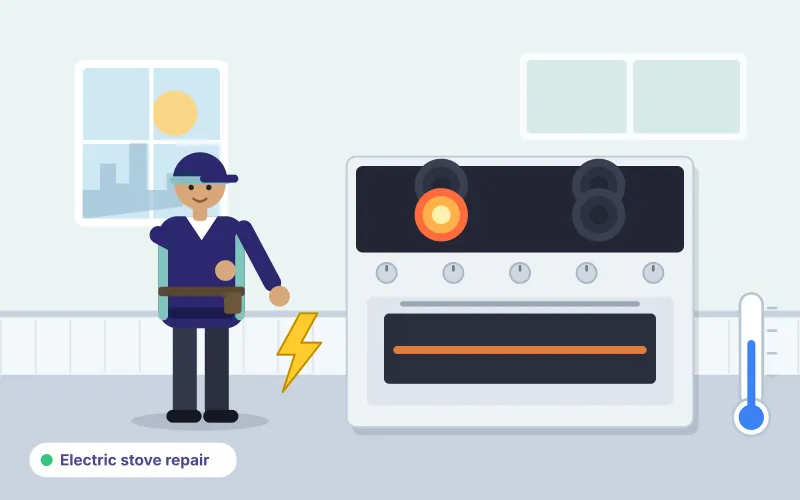
Electric stoves combine several appliances in one: radiant or coil hotplates, ceramic or induction hobs, a main oven, sometimes a grill or fan oven, plus the switches, thermostats, timers and wiring behind them. This service covers diagnosing and repairing electric cookers and ovens: burners that do not heat, hobs that heat unevenly, ovens that struggle to reach or hold temperature, controls that do not respond, and signs of electrical faults.
It is aimed at households, rented flats, small restaurants and shops with an electric cooker. If your cooker runs on gas, ask us before booking, because our listed stove service is for electric appliances. Our article on gas stoves that will not light explains who to contact for gas faults.
Common electric stove problems
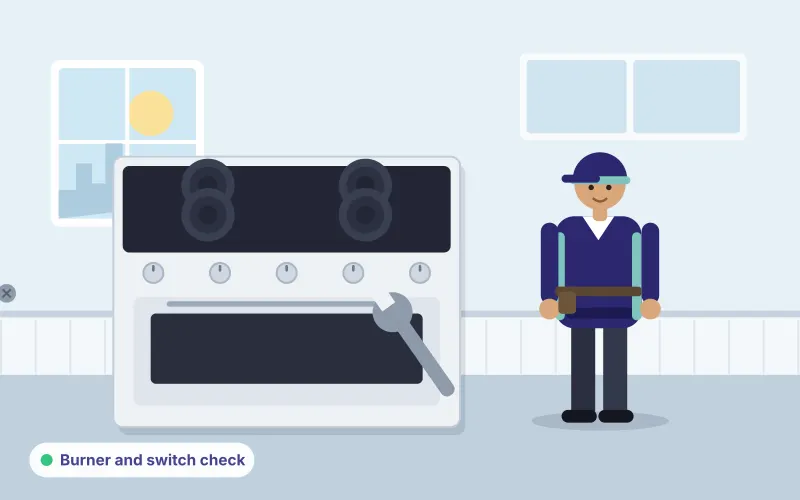
- One burner stays coldA failed element or hotplate, a worn infinite switch, loose connections or a burnt terminal.
- Burner stays hot or will not turn downA faulty control switch.
- Oven will not heatBurnt-out bake or grill element, failed thermostat or thermal fuse, or a control fault.
- Oven heats unevenly or the temperature is wrongFaulty temperature sensor, thermostat or fan, or a damaged door seal.
- Sparks, crackling or a burning smellSwitch off at the isolator and stop using it. Damaged elements or wiring need urgent attention.
- Breaker trips when the stove is usedElement or wiring fault leaking current.
- Controls or display do not respondA control board, touch panel or relay fault.
- Oven door does not close properlyWorn hinges or seals that let heat escape.
How we diagnose an electric stove
- Describe the faultWe ask which burner or oven function is affected, what the controls do and whether there have been sparks, smells or tripped breakers.
- Isolate and inspectWith the stove safely isolated, a technician inspects elements, terminals, wiring, switches and the thermostat.
- Test the componentsElements, switches, thermostats and sensors are tested rather than replaced on suspicion.
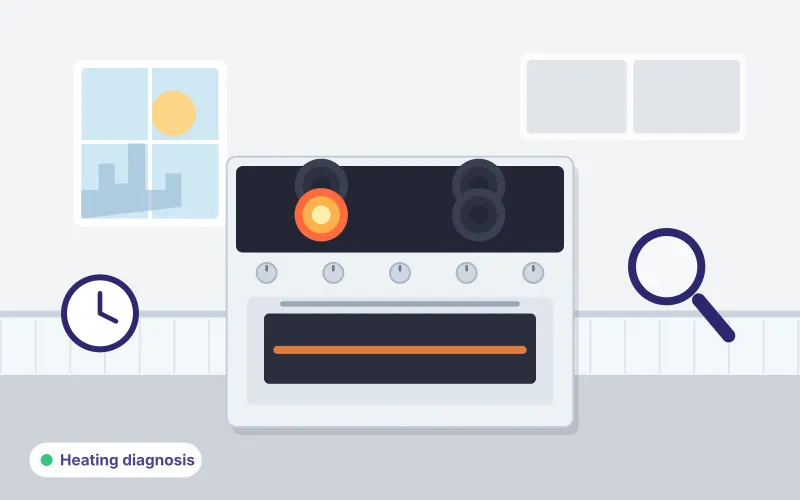
- Check the cooking performanceThe cooker is run to check heating times and evenness.
- Explain and repairWe explain the cause and what the repair involves, then carry it out.
- Safety check and testThe stove is tested before we leave and any remaining concerns are explained.
Why electric stoves fail
Heating elements wear out through repeated heating and cooling cycles. Spills seep into connections and cause corrosion or tracking. Hot, humid kitchens add moisture to terminals and switches. Heavy pans, power fluctuations and blocked oven vents add stress. Most faults start small: a loose connection that heats up, a switch that sticks, a seal that has hardened. Catching them early is cheaper and safer than waiting for a failure.
What you can check safely
- Confirm the stove's isolator or breaker is on and that a power cut did not reset the clock or lockout.
- Try a different pan on the burner. A warped or unsuitable pan can seem like a failed ring.
- Make sure induction hobs are used with induction-compatible cookware.
- Wipe spills from the surface once cool and keep vents clear.
Safe use, long life
Wipe spills promptly, avoid dragging heavy cookware across hobs, use pans that match the burner size and let the oven cool before cleaning. Do not use foil to line oven floors or block vents unless the manual allows it. Our guide to oven temperature and door seal problems explains how seals and sensors affect results.
Need help with your AC or appliance?
Call or message us on WhatsApp. Tell us the appliance, its make and model if you have them, and what is happening. A photo or short video of the fault helps.
Available 24/7 · We aim to respond within 30 minutes · 6-month warranty on repair work
Electric stove repair FAQs
Why does only the front left burner work?
Each burner has its own element and switch. If only one works, the fault is almost always in the others' elements, switches or connections, not the whole stove.
My oven feels hot but food cooks slowly. What is wrong?
A faulty temperature sensor or thermostat may be reporting the wrong temperature, or the door seal may be leaking heat. A technician can check actual temperature against the setting.
Is a spark or crackling noise ever normal?
A brief click when a burner switches on can be normal on some models. Continuous sparking, loud crackling or visible arcing is not. Switch off and call us.
Can induction or ceramic hobs be repaired?
Often. Cracked glass usually means replacement of the glass or hob. Control and power electronics faults need component testing. Tell us the make and model.
Is it safe to keep cooking if one burner is dead?
If there are no sparks, smells or tripping, the other burners are generally fine, but the underlying fault can worsen. Have it looked at soon.
Helpful guides
Kitchen & Stove Guides
Electric Stove Not Heating? Common Causes and Safe Checks
When an electric stove stays cold, the cause may be simple or electrical. Here is how to work through it safely.
Kitchen & Stove Guides
Electric Stove Burner and Switch Faults Explained
Burners that stay on, flicker or heat unevenly point to specific parts. Learn what each symptom usually means.
Kitchen & Stove Guides
Oven Temperature and Door Seal Problems: Causes and Fixes
Food that cooks unevenly or too slowly often points to the thermostat, an element or a worn door seal. Here is how to tell.