
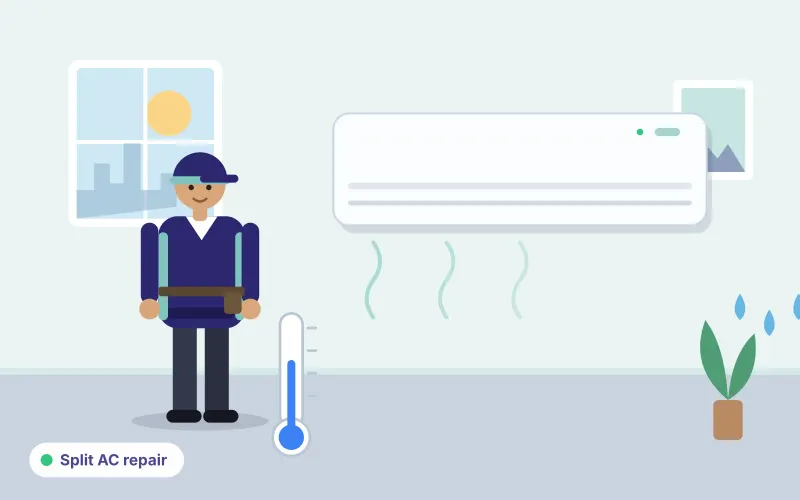
How a split AC works, and why that helps with repairs
A split system divides the air conditioner into two parts connected by refrigerant pipes and a cable. The indoor unit, mounted high on a wall, holds the evaporator coil, a fan, the filter and the drain tray; it absorbs heat from the room. The outdoor unit holds the compressor, condenser coil and a fan; it releases that heat outdoors. A fault on either side, or in the link between them, can show up as the same complaint: the room is not cold.
Understanding that split helps us diagnose faster. Dripping and ice usually point indoors. A unit that hums but never cools, or trips the breaker, often points outdoors. Poor cooling can come from either, or from refrigerant levels in between.
Common split AC problems
- Water leaking from the indoor unitTypically a blocked drain line, a dirty drain tray or an evaporator coil that has frozen and is melting.
- Weak coolingClogged filter or coil, failing fan, outdoor unit dirty or low refrigerant.
- Ice on the coil or pipeRestricted airflow or a refrigerant problem. Switch off and let it thaw.
- Outdoor unit runs but fan or compressor does notFailed capacitor, contactor, fan motor or compressor issue.
- Loud or new noisesLoose panels, fan imbalance, worn bearings or compressor trouble. See what AC noises mean.
- Remote works but unit does not respondA control board, sensor or communication fault between the indoor and outdoor units.
- Error codes or flashing lightsCodes help narrow the cause. Note the code and tell us.
- Bad smellDamp or dirty coil, drain tray or filter.
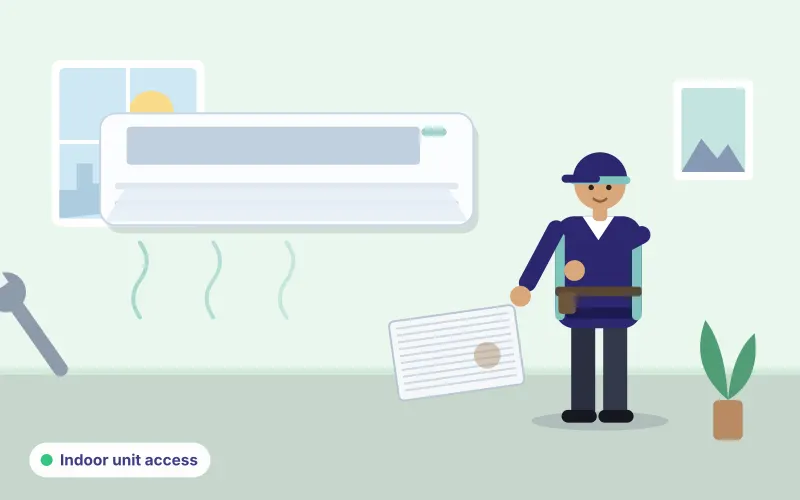
What we check on a split AC
- Symptoms and historyWe ask about error codes, noises, recent power cuts or cleaning and any earlier repairs.
- Indoor unitFilter, evaporator coil, fan, louvres, drain tray and drain line are inspected.
- Outdoor unitFan, condenser coil, mounting, visible pipework and connections are checked.
- Operation and readingsThe unit is run to check temperatures, airflow and cycling; refrigerant-side checks are made where symptoms warrant them.
- Electrical componentsCapacitors, contactors, sensors and control boards are tested by a technician when the symptoms point there.
- Explain, repair and testWe tell you the cause and repair plan, carry out the repair and test the unit.
Questions that help us help you
When you get in touch, a few details speed things up: the brand and model, whether the unit is an inverter or fixed-speed type if you know, how old it is, whether it displays an error code, and whether the fault is constant or intermittent. A video that shows and plays the sound, or a photo of a leak, is very useful.

Safe checks and what to leave alone
You can safely confirm the set mode and temperature, replace remote batteries, check the breaker and look at the filter. If water is dripping, place a towel and switch the unit off.
Preventing repeat faults
Regular filter cleaning and yearly AC maintenance prevent many of the faults listed above. If cooling has faded gradually, have refrigerant checked rather than assuming it just needs topping up; our AC gas refill page explains why. For a broader overview, see AC repair in Bahrain.
Need help with your AC or appliance?
Call or message us on WhatsApp. Tell us the appliance, its make and model if you have them, and what is happening. A photo or short video of the fault helps.
Available 24/7 · We aim to respond within 30 minutes · 6-month warranty on repair work
Split AC repair FAQs
Why does my split AC leak only when it is humid?
High humidity means the coil collects more condensation, so a marginal drain problem becomes visible. A partly blocked drain line or poorly sloped pipe often shows up first in humid weather.
Is an inverter split AC harder to repair?
Inverter units have more electronics, so fault-finding relies more on error codes and component testing. Mention it when you contact us so we can plan accordingly.
The indoor unit blows cold air but the room stays warm. Why?
Possible causes include a unit too small for the room, doors or windows open, heavy sun load, or the outdoor unit failing to reject heat properly. A technician can sort out which applies.
Can I keep using the AC if it is leaking a little?
A slow drip may be tolerable for a short time, but water can damage walls, floors and electrics. Place a container, switch off if the leak is more than a drip and arrange a repair soon.
My remote shows nothing. Is the AC dead?
Try new batteries first. If the unit's own button works but the remote does not, the remote or its receiver is the issue. If nothing responds, power or control board faults are possible.
Helpful guides
AC Guides
AC Noises Explained: What Rattles, Hisses, Clicks and Buzzes Mean
Air conditioners make a range of sounds. Some are normal, others warn of trouble. This guide helps you tell the difference.
AC Guides
AC Running but the Room Stays Warm? 11 Reasons and What to Do
An AC that runs but fails to cool can have simple or serious causes. Here is how to tell them apart, what is safe to check and when to call for help.
AC Guides
Split vs Window AC: Repairs, Lifespan and Long-Term Value
Which type lasts longer and is easier to repair? A balanced look at both, plus how to decide between repair and replacement.