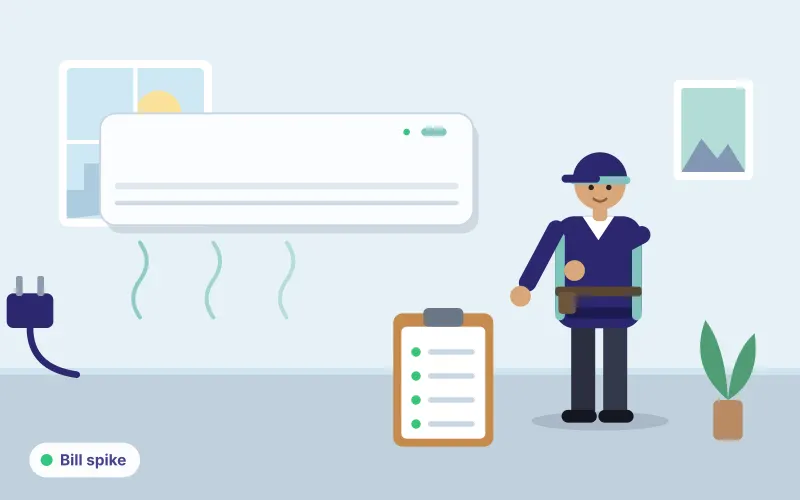
A bill that is much higher than last month is alarming, and the air conditioner is the usual suspect, because it is typically the biggest electricity user in a Bahraini home. But before blaming the unit, work through the possibilities in order. The cause may be your AC, your habits, the weather or something else entirely.
Step 1: Compare like with like
Look at the same period in previous years, not just last month. Summer bills are naturally higher than spring. Check the billing period too: a longer period or an estimated reading can distort comparisons.
Step 2: Ask what changed
- Did the weather become hotter or more humid?
- Are more people at home, for example during school holidays?
- Were new appliances added, or extra rooms cooled?
- Has the thermostat setting or running time changed?
- Are guests staying, or is a unit left on in an empty room?
Step 3: Look at the unit
Signs that the AC itself may be responsible:
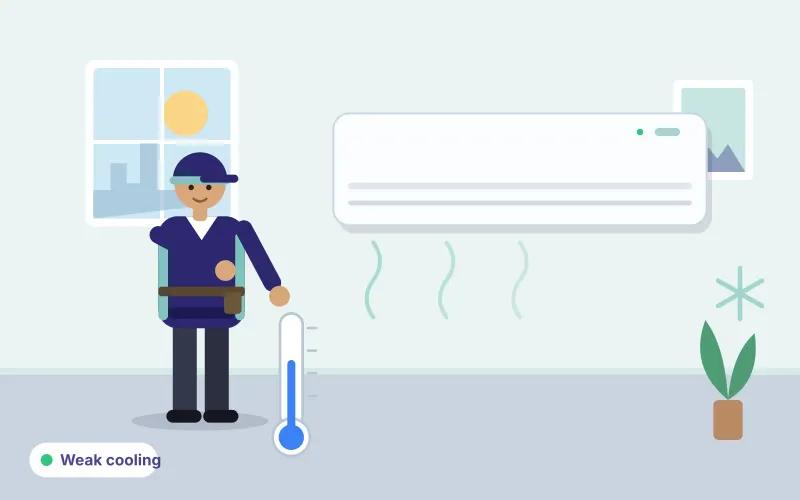
- Cooling is weaker than before.
- The unit runs constantly without reaching the set temperature.
- There is ice on the pipes or indoor unit.
- New noises have appeared.
- The outdoor unit is very dusty, or the filter is clogged.
Step 4: Safe checks
- Clean or replace the filter.
- Clear the area around the outdoor unit.
- Check for open doors and windows or gaps.
- Confirm that no old unit, spare-room AC or water heater has been left running.
- Make a note of how long each unit runs over a day.
Step 5: Test with a controlled change
Change one thing at a time. For example, clean the filters and keep the thermostat at a moderate level for a week, then compare. If the change brings improvement, you have learned something. If nothing changes, a fault may exist.
Step 6: Get a technician's view
If the unit shows symptoms, or you cannot find another cause, have it inspected. A technician can check airflow, temperatures, refrigerant-side behaviour, the fans, the compressor and electrical components. See AC repair. Learn more about the hidden reasons an AC uses more power.
Other causes outside the AC
An old refrigerator, a faulty water heater, an immersion element left on or a failing appliance can also push consumption up. Meter or billing issues are rare but possible; the electricity provider can advise.
Preventing future surprises
Regular AC maintenance, moderate settings and good habits help keep consumption predictable. See habits that cut AC running costs.
Need help with your AC or appliance?
Call or message us on WhatsApp. Tell us the appliance, its make and model if you have them, and what is happening. A photo or short video of the fault helps.
Available 24/7 · We aim to respond within 30 minutes · 6-month warranty on repair work
Frequently asked questions
Can a failing AC raise my bill suddenly?
Yes. A fault such as low refrigerant, a dirty coil or a weak fan can make a unit run much longer for the same cooling.
How do I know whether the AC or something else is responsible?
Check what changed, look for AC symptoms and test one change at a time. A technician can confirm.
Is a high bill always a sign of a fault?
No. Hot weather, longer use and extra occupants can raise bills without any fault.
Should I replace the AC?
Not necessarily. Diagnose first. Repair or maintenance may solve the problem.