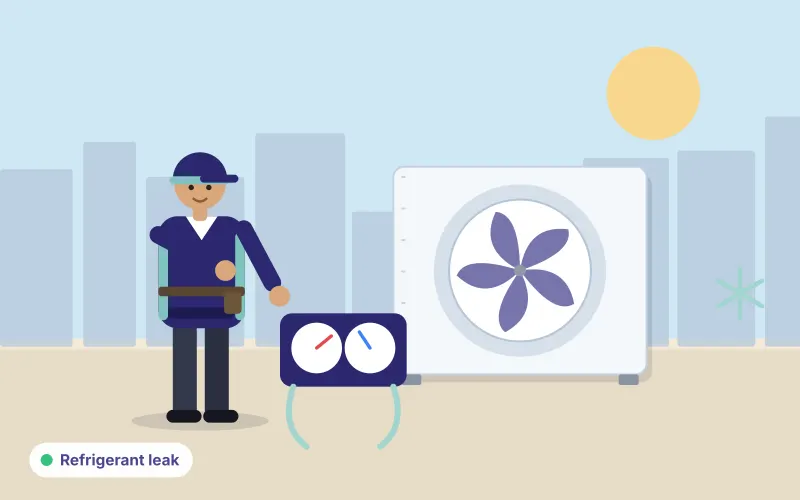
Many people call it "gas" and assume an air conditioner uses it up over time, like petrol in a car. It does not. Refrigerant circulates in a sealed loop and, in a healthy system, stays there for the life of the unit. If the level is low, refrigerant has escaped, and that means a leak.
Signs of a possible leak
- Cooling that has weakened gradually over weeks or months
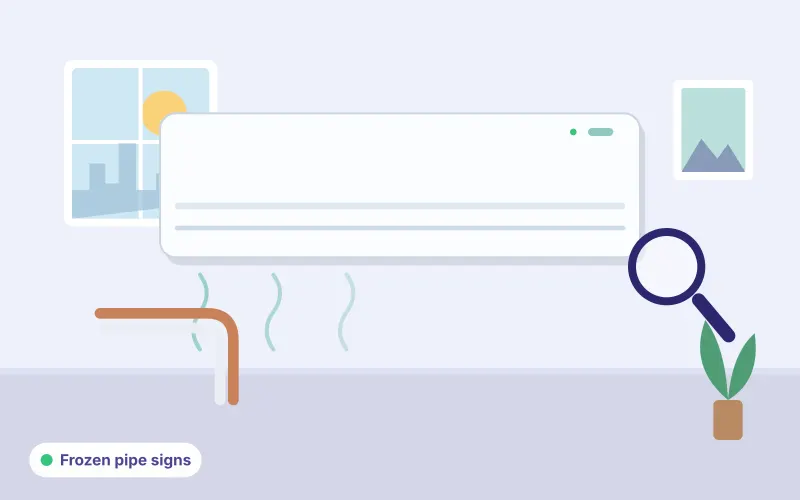
- Ice forming on the indoor coil, the copper pipes or the outdoor connections
- A hissing or bubbling sound near the unit
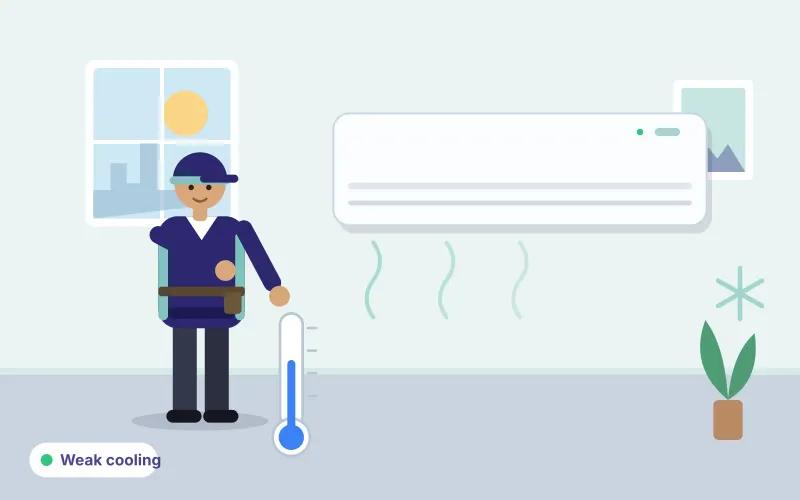
- Warm air from vents while the fan runs normally
- A unit that runs constantly without reaching the set temperature
- Oily residue around pipe joints or connections
- Higher electricity use as the system works harder
None of these proves a leak by itself. A dirty filter, dirty coils or a failing fan can cause similar symptoms, so a technician has to measure and inspect.
Where leaks happen
Common leak points include flare connections at the indoor and outdoor units, service valves, joints along the copper pipework, and the coils themselves, where corrosion or vibration can cause pinholes. Installation quality, pipe movement and age all play a part.
Why topping up alone is not a repair
Adding refrigerant to a leaking system restores cooling for a while, but the leak remains. The level drops again, and each repeat costs time and money. A system running low can also strain the compressor. A proper repair finds the leak, fixes it and then restores the correct charge. See AC gas refill for how we approach this.
How a technician approaches it
- Check the basics so that airflow and dirt problems are ruled out.
- Measure system behaviour with suitable instruments.
- Locate the leak using methods appropriate to the unit.
- Repair or replace the faulty joint, valve or section, where practical.
- Test the system for tightness before recharging.
- Recharge to the correct specification and confirm that cooling performance is normal.
If a coil is badly corroded or the unit is old, the technician may explain that replacement is more sensible than repair. A fair assessment compares the repair with the age and value of the unit.
Safety
Reducing the risk
Regular AC maintenance lets a technician spot early signs such as oil traces and loose connections. Protect outdoor pipework from knocks, and make sure installation is done carefully in the first place.
Need help with your AC or appliance?
Call or message us on WhatsApp. Tell us the appliance, its make and model if you have them, and what is happening. A photo or short video of the fault helps.
Available 24/7 · We aim to respond within 30 minutes · 6-month warranty on repair work
Frequently asked questions
How often should an AC need refrigerant?
In a healthy sealed system, never. Needing it repeatedly means there is a leak.
Can a leak be fixed or must the unit be replaced?
Many leaks at joints and valves can be repaired. Damaged coils may need replacement of the part or the unit, depending on age and cost.
Is refrigerant dangerous to breathe?
Leaks in a ventilated room are usually small, but refrigerants should not be inhaled in quantity. Ventilate, switch off the unit and call a technician.
How can I tell a leak from a dirty filter?
You cannot be sure at home. Clean the filter first; if cooling is still weak or you see ice, have the unit checked.